Everyone knows who Jim Bridger was, right? A famous frontiersman, fur trapper, and wilderness guide through much of the 19th century, Jim was among the first white men to visit the Yellowstone region and explored the Great Salt Lake area, reaching it by bullboat in 1824. He left his mark on much of the American West.
Since my husband and I have done a lot of camping in the Uintahs, we’ve driven past Fort Bridger more times than I can count and toured the fort a few times.
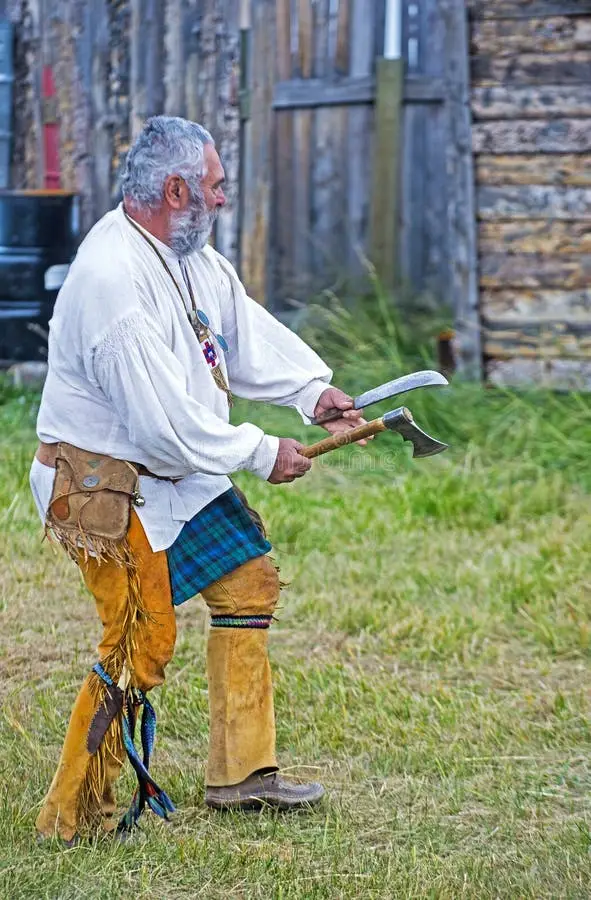
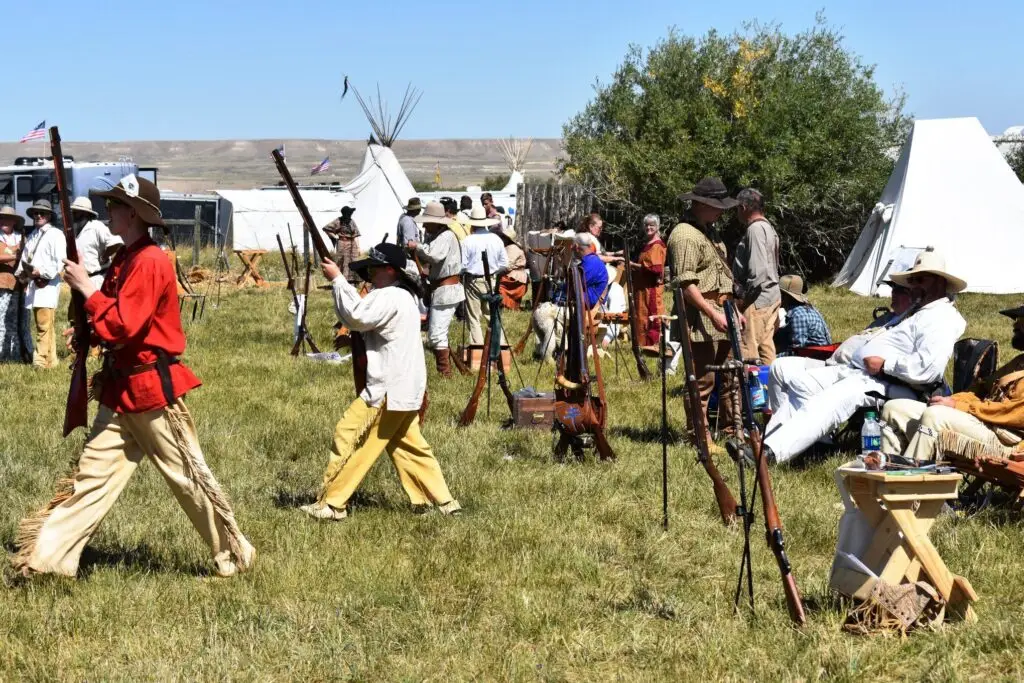
I especially enjoy going when the Mountain Man fair is going on; lots of fascinating things to see and do, not to mention exciting people in costume, demonstrations, and some excellent wares for sale.
Jim Bridger and his partner, Louis Vasquez, established Fort Bridger in 1843 on the Black’s Fork of the Green River to trade with the American Indians he had befriended during his years in the fur trade and with westward-bound emigrants. For the next century, the area—known as the Bridger Valley—served as a crossroads for the Oregon/California Trail, the Mormon Trail, the Pony Express Route, the Transcontinental Railroad, and the Lincoln Highway. Today, the valley in southwestern Wyoming is a historic byway, incorporating the small towns of Fort Bridger, Urie, Mountain View, and Lyman, which Interstate 80 bypassed. Consisting of two rude double-log houses about 40 feet in length, joined with a pen for horses, the first fort also boasted a blacksmith’s shop, something many emigrants welcomed after months on the trails. Many found the fort disappointing, being poorly outfitted and little more than a few rough-hewn log buildings.
On July 7, 1847, the Mormon Pioneer Company arrived at the fort. They spent a day there but did not like the inflated prices. Even so, a small group of Mormons settled nearby, and tensions developed between Bridger and the new settlers, who reported that Bridger was violating federal law by selling liquor and ammunition to the Indians. In response, Brigham Young, president of the Church of Jesus Christ of Latter-day Saints and a federal Indian agent, sent his Mormon militia to the fort in 1853. Having learned they were coming and knowing the militia’s reputation, Bridger fled. Later that year, the Mormons established Fort Supply about twelve miles south of Fort Bridger, specifically to service the Mormon emigrants.
Bridger complained to U. S. Senator Gen. B. F. Butler, claiming the Mormons robbed him of over $100,000 in goods and supplies and threatened to kill him. The following spring, Young sent a detachment of well-armed Mormons to take control of both Fort Bridger and the Green River ferries, both of which became integral parts of the Mormon settlement plans for the region. A large stone wall was built around the fort. For a year, Mormons maintained control of the fort. In July 1855, Bridger returned and eventually agreed to sell out.
After selling Fort Bridger, Jim spent the next decade as a guide and an army scout in the early Indian wars. By 1868, Bridger’s eyesight was failing, and he increasingly suffered from rheumatism, a common ailment among fur trappers. He retired to his Westport farm, where he cared for his apple trees. He died at the age of 77 on July 17, 1881. His first wife was a Flathead Indian woman. After her death in childbirth, he married a Ute woman. When she, too, died in childbirth, he married the daughter of Shoshone Chief Washakie.
In the fall of 1857, Jim’s old fort became embroiled in a new controversy when President Buchanan sent U.S. troops to Utah Territory to enforce federal authority and to install federally appointed territorial officers. This began what became known as the Utah War. To keep the fort from being seized, Mormon militia under “Wild Bill” Hickman and his brother burned both it and Fort Supply. Johnston’s army spent a miserable winter with little shelter and food.
The following information was gleaned from Wikipedia.
The winter of 1857, the Army established temporary Camp Scott on the site, and in the spring of 1858, tension between the Mormons and the U.S. military subsided. The Army took over and rebuilt Fort Bridger as a base for troops whose later jobs included protecting laborers on the transcontinental railroad, gold miners at South Pass, and Shoshone Indians near the fort, and later after their reservation was established on Wind River.
When the Utah War ended, the U.S. government refused to honor either Bridger’s or the Mormons’ claim to the property and instead turned the commercial parts of its operation over to William Alexander Carter, who had come west with Johnston’s army as a sutler. Along with his family, Carter lived at the fort, rebuilding and stocking it and eventually becoming Wyoming’s first millionaire.
Various volunteer units of the U.S. Army were stationed at the post during the Civil War. Beginning in 1866, regular units of the U.S. Army manned the post until 1878, when it was temporarily abandoned. The Army again occupied it from 1880 to 1890, when, with the end of the Indian Wars, the Army closed it for a final time. Many of its buildings were sold and dismantled.
The thirty-eight-acre site was named a Wyoming Historical Landmark and Museum in 1933. Parts of the stone wall constructed by the Mormons in the 1850s have recently been the subject of archaeological explorations. Several restored historic buildings remain at the fort, as well as a reconstructed trading post, an interpretive archaeological site, and a museum housing artifacts from the different periods of the fort’s use. It is well worth visiting.